INTRODUCTION
Western democracies around the world enjoy certain privileges regarding how they are governed. This influence in governance empowers individuals to have a voice and speak out to the government when their needs are not being met. Much of the Middle East, however, does not enjoy these privileges, such as the right of equal political participation, political alternatives, or even control over their public discourse. This paper will argue why authoritarian regimes persist throughout the Middle East even in states with elections and modernized societies. Through the analysis of power, specifically the disempowerment of citizens share within the political and societal sphere, one can better understand the complex mechanism that drives authoritarianism. Power seems to be the most consistent variable that can be observed, but it is one that is often surmised, as there is no singular way to measure power. The duality in the relationship of power in the context of this paper is a subjugation of power the government wields over society and, subsequently, a powerless society that is unable to reject it. The dichotomy of this relationship is evident based on World Values Survey (WVS) data in rentier and non-rentier states alike within the Middle East. I will first explore the theoretical frameworks that support my argument as well as discuss my methodology for analyzing the data before presenting disempowerment among citizens as the core reason for why authoritarianism persists within the Middle East. Utilizing WVS variable Q248 (Wave 7), “People obey their rulers,” Freedom House data, as well as other scholarly sources, I will analyze Iraq, Iran, Turkey, and Lebanon to juxtapose my assertion as they provide diverse cases for analysis.
THEORETICAL FRAMEWORK
The persistence of authoritarianism in the Middle East can be better contextualized through the lens of disempowerment, where citizens’ lack of political power and participation promote sustainability of the incumbent regime. In authoritarianism, there is traditionally a concentration of power dispersed through a select few that encompass the central government. This select few, also known as the elite, uphold the fabric of the regime and contribute to its persistence. Based on this concentration of power, opposition is prohibited and highly censored, which suggests that disempowerment is systemic and inherent in any authoritarian regime.
Scholars such as Eva Bellin speak on this persistence based on the notion of the robustness of authoritarian institutions through coercive apparatus. Bellin’s argument is a divergence from other scholars’ elite control theories, such as Samuel Huntington’s “The Third Wave.” Huntington argued that democratization happened in waves and that factors such as civil society, political culture, and economic development played a role in the transition to democracy. Bellin, on the other hand, rejects the idea that culture plays a significant part in the lack of democratization in the ME. Instead, she argues that through means of force, authoritarian regimes persist. Through this coercive apparatus, the power is reinforced in the infrastructure, such as intelligence agencies, the military, and the police. This allows for the government to extinguish any political uprisings or regime change and repress citizens’ participation, which further disempowers them to revolt. It also funds loyalists who are more inclined to remain true to a regime should an uprising happen. This coercive apparatus effectively reinforces the idea of disempowerment by heavily restricting and sometimes completely eliminating avenues for effective political participation.
The concept of disempowerment stems from the already clearly defined authoritarian powers within most regimes in the Middle East. There are several ways to extrapolate and hold onto power, which provides the regime ample room to operate with little disruption. According to scholar Larry Diamond, most Arab autocracies don’t have to only rely on fear or coercion to maintain power, although this is an effective method. He suggests that other forms of repression seem to also work. “Repression is selective and heavily mixed with mechanisms of representation, consultation, and co-optation. Limited elections play an important role in about half of the sixteen autocracies.” (Diamond, 2010) He goes on to suggest that the regime can give more power to the people based on the internal and external forces within the state. The act of disempowerment seems to ebb and flow with the political trajectory of the regime. Rather than coercion or use of force, the management of political efficacy can improve the longevity of the regime and promote disempowerment amongst the populace. Based on this notion, there is an ever-increasing barrier for the population to challenge the regime. If unchallenged, eventually the regime takes stronger roots within society and proves to be more difficult to eliminate and democratize.
Authoritarianism thrives when the population of people is disempowered; perhaps this is why authoritarian institutions implement some sort of control over the amount of power their citizens have. The limited power that citizens have can be seen in non-rentier states, but it is especially evident in rentier states, as they have a means to continue control without the consent of the governed. Rentier states such as Iraq or Iran, which are oil abundant, exacerbate disempowerment due to the lack of financial backing of their citizens. This lack of taxation, or “no taxation without representation,” allows for rentier states to govern based on the wishes of the government, not the needs of the people. The fiscal health of the government is solely due to the external rents, such as the exportation of oil, which disincentivizes rulers from engaging in responsive governing, further disempowering its citizens. The citizens in non-rentier states can see similar disempowerment; however, these states do not have the financial backing of external influences, which forces them to at least partially include their citizens in politics. Even in these non-rentier states, such as Lebanon and Turkey, one can feel indications of repression. Infringement on civil liberties, political opposition leading to imprisonment, and elite control contribute to the disempowerment of its citizens.
METHODOLOGY
IV= Disempowerment, DV=Authoritarian Persistence, CV=Political Obedience
The method through which I will evaluate why disempowerment contributes to the persistence of authoritarianism will be through a comparative case study approach. By analyzing four states—Iraq, Iran, Turkey, and Lebanon—my causal variable would be able to be seen in different variations. These four cases were selected based on 2 varying factors: regime type and rentier status. Turkey and Lebanon share a more semi-democratic or hybrid regime, whereas Iraq and Iran have more consolidated authoritarian regimes. Similarly, these cases differ in rentier status: Iraq and Iran are rentier states, whereas Turkey and Lebanon are non-rentier states. Disempowerment is interpreted as an unequal distribution of power that prohibits citizens from political participation, agency, and public discourse. This variable can be measured utilizing Q248 from the World Values Survey (Wave 7), which asks the respondents to agree or disagree with the following statement: “People should always obey their rulers.” Question Wording: (Please tell me for each of the following things how essential you think it is as a characteristic of democracy.). Use this scale where 1 means “not at all an essential characteristic of democracy” and 10 means it definitely is “an essential characteristic of democracy.”
Those who agree are higher on the scale given and suggest that disempowerment is evident. This question both implies that by obeying their rulers, they are confirming their legitimacy as well as suggesting that this systematically reinforces authoritarian regimes. It is important to note that the margins within the WVS data are still relatively slim, which is why I supplemented additional data from Freedom House for external context. Authoritarianism certainly is still persisting even in countries with democratic systems. For example, Turkey is thought to be one of the few democratic states within the Middle East. Since 2017, however, Freedom House data suggests that it is deviating to a more authoritarian regime. This fluctuation in data may cause a deviation in interpretation, but the method is still the same throughout. Ultimately, this method is to compare how disempowerment is evident based on varying economic and regime types.
CASE STUDIES AND DATA

Freedom House Data:
Iran: 11/100 – Iraq: 31/100 – Turkey: 32/100 – Lebanon: 39/100
Disempowerment is the unequal distribution of power that prohibits citizens from political participation, agency, and public discourse. Based on the data from Q248 in the WVS (Wave 7), the idea of disempowerment can be contextualized based on the public’s perception of political legitimacy and, more importantly, political obedience. This section will explore the variations of disempowerment based on the four cases identified previously. Freedom House data of the four cases was also incorporated for reference. This is a measurement of freedom based on an aggregate civil liberties score compared with other countries in the world in 2025.

I. Iran
Iran is an authoritarian rentier state that relies on the revenue from oil exports to essentially self-legitimize. Iran seems to hold elections fairly regularly, but they are not up to the same democratic standards measured in other democracies. Power is held primarily by an elite body that eliminates individuals from candidacy based on perceptions of loyalty to the supreme leader, Ayatollah Ali Khamenei. This, coupled with a proficient security force, allows for easy suppression of any uprising. Disempowerment is most evident in Iran, as they have a staunchly consolidated authoritarian regime.
Q248 Data: Based on WVS (Wave 7), when asked to rate whether “People obey their rulers,” 24.3% of respondents rated a 5, 12.6% rated an 8, and most notably 22.3% deemed it an essential characteristic of a democracy. With the mean score of 6.21, disempowerment via political obedience within Iran is clearly evident. Ranked 11/100 on the Freedom House scale, I would venture to say that in this particular case, authoritarian norms are deep-rooted, and there seems to be a perpetual cycle of disempowerment amongst the populace
II. Iraq
Iraq is considered a hybrid regime in that it holds elections, but control of elite groups and militias, as well as corruption strains political competition. Iraq is a rentier state and like Iran, relies on revenues from oil exports to fund government expenditures. Since the invasion of Iraq and the subsequent fall of Saddam Hussein, parties like the Fatah Alliance, Dawa Party and the individuals from the Sadrist Movement have enjoyed exclusive powers within the state institutions. Power rests with Abdul Latif Rashid but the Muhasasa System of sectarian government allows for a disbursement of power through the elites. In this particular case, the youth is most disempowered as they are essentially shut out from political participation. Despite the regular elections, there seems to be a lack of political plurality. Concentrated power in the elite which controls the outcome of elections, disempowering the electorate from seeing any real change.
Q248 Data: Based on WVS (Wave 7), when asked to rate whether “People obey their rulers” 15.2% of respondents rated a 5, 13.2% rated a 6, and most notably 16.6% deemed it an essential part of democracy. With the mean score of a 6.43, there seems to be evidence that disempowerment through political obedience is active. Ranked 31/100, the persistence of authoritarianism is based on the weaknesses of the formal institutions as well as the Muhasasa System which creates a power disparity between the populace and the elite.
III. Lebanon
Lebanon is a semi-democratic country in that they hold regular elections, there are guarantees of civil liberties based on religious affiliation as well as media pluralism, but there is concentrated political corruption. The sectarianism that is embedded within the fabric of the government contributes to a dysfunctional state. There is a democratic system of government, but it is grounded by the deep-rooted patronage system. Moreover, Lebanon is not a rentier state; therefore, the government relies on taxes as well as foreign aid to supplement its expenditures. While the power dynamic should be clear in that citizens should have a say in government decisions, that is not the case. Power rests with President Joseph Aoun and Prime Minister Nawaf Salam and groups such as Hezbollah, which critically influence decisions within the government.
Q248 Data: Based on WVS (Wave 7), when asked to rate whether “People obey their rulers,” 12% of respondents rated a 4, 11.6% rated a 6, and most notably 20% rated it a 5, suggesting a divided populace or uncertainty. With a mean score of 4.83, it is the lowest amongst the cases analyzed. The results suggest that political obedience is not associated with the perception of democracy. Therefore, there is not significant data to suggest that disempowerment is evident in this case based on the CV. However, this leaves the door open for more exploratory research in disempowerment through another variable. With a Freedom House ranking of 39/100, the highest among the selected cases, perhaps the civil liberties and media plurality aid the perception that disempowerment shows as not occurring. Or perhaps rather citizens feel as if they must vote along the lines of sectarianism due to a lack of political plurality and no alternative.
IV. Turkey
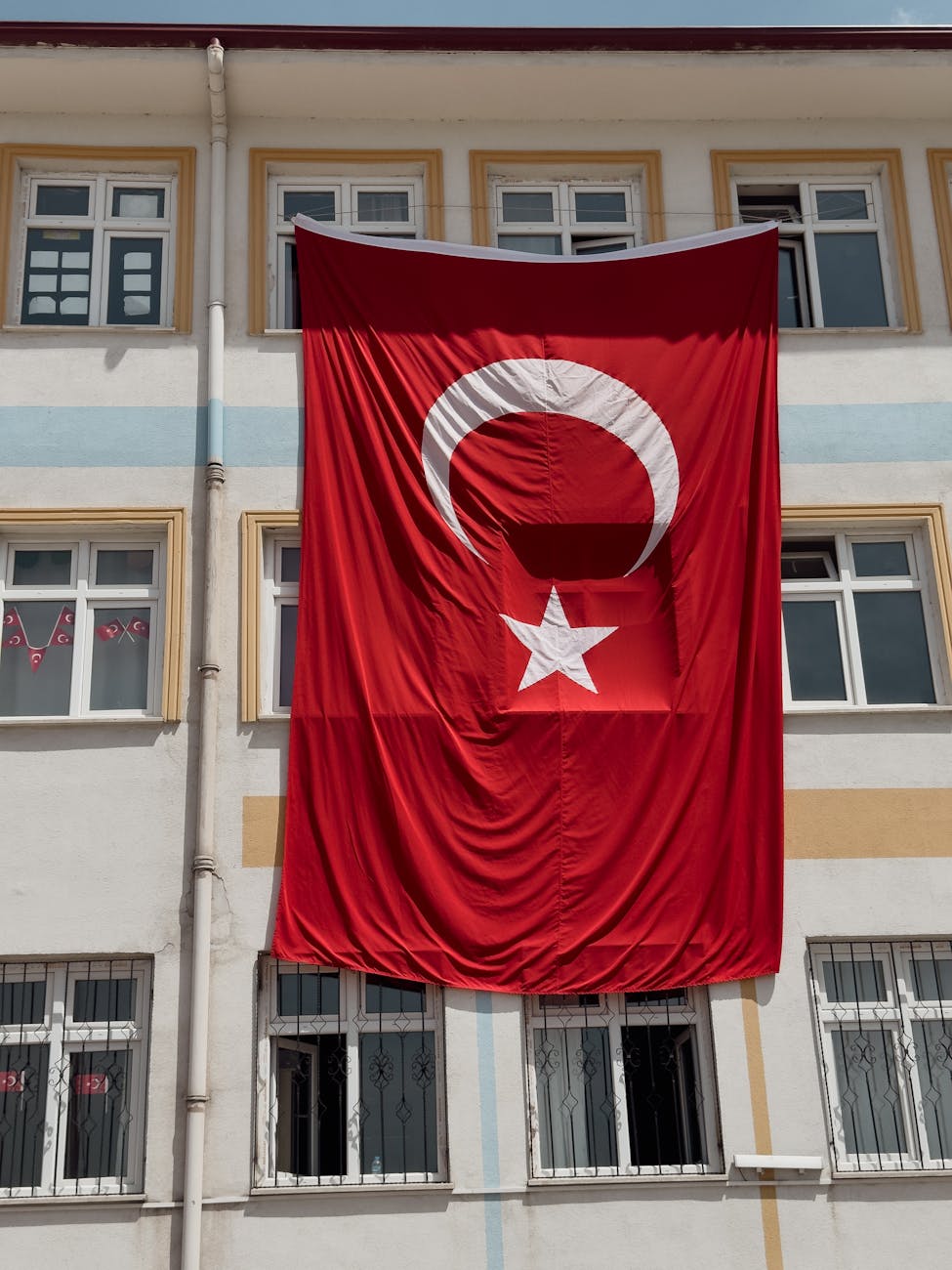
Turkey is considered a parliamentary democracy but has shifted into an executive presidential system in which President Recep Tayyip Erdoğan, along with the Justice and Development Party (AKP) and the National Movement Party (MHP), has consolidated power within the executive branch. Given this, Turkey is leaning towards authoritarianism and is no longer considered a full democracy. Power is concentrated solely within the executive, and disempowerment has been felt within the populace. Political plurality seems to no longer be the case, and while there are still some democratic values within the populace, there is no meaningful influence over the government.
Q248 Data: Based on WVS (Wave 7), when asked to rate whether “People obey their rulers,” 13.7% of respondents rated a 5, 11.8% rated a 6, and most notably, 19.3% deemed it not an essential characteristic of democracy. With a mean score of 5.01, the data suggests that some citizens associate political obedience with democratization. Turkey is in the middle position in the rating of disempowerment. With a Freedom House rating of 32/100, one point higher than Iraq, there is an evident shift in perception of power amongst the populace. For comparison, 2024’s Freedom House rating was 38/100; within a year, Turkey has dropped 6 points. Public trust seems to be growing less and less as the manipulation by the state of fair elections circumvents political participation.
CONCLUSION
Authoritarianism persists in the Middle East due to many factors, most notably the dichotomy of power within the state. Citizen disempowerment across rentier status and regime type can be seen. From the data based on the WVS and Freedom House, as well as scholarly sources, we have seen that disempowerment is seen through political obedience. The percentage of the sample data suggests that portions of the population remain uncertain, which can indicate a greater struggle and/or uncertainty of political legitimacy. The data also suggest that there are authoritarian tendencies rooted within the norms of the political and societal scope. Disempowerment is the unequal distribution of power that prohibits citizens from political participation, agency, and public discourse. Based on this assertion, the lack of power amongst citizens begins at the political efficacy level. Citizens are unwilling to challenge the authority of the state due to the power disparity. Many believe that their efforts would prove futile and therefore lead to nothing but severe consequences. There is not a loss of democratic consciousness, but rather citizens feel they do what they must in order to survive the conditions set by a persistently repressive regime. Unless the dynamic shifts and political efficacy among citizens proves meaningful, disempowerment will continue, and subsequently authoritarianism will continue to persist in the Middle East.
Bibliography:
Anderson, L. (2011, May-June). Demystifying the Arab spring: parsing the differences between Tunisia, Egypt, and Libya. Foreign Affairs, 90(3). https://link-gale-com.csulb.idm.oclc.org/apps/doc/A258910195/OVIC?u=long89855&sid=summon&xid=2012e9f4
Bellin, E. (2004). The Robustness of Authoritarianism in the Middle East: Exceptionalism in Comparative perspective. Comparative Politics, 36(2), 139–157. https://doi.org/10.2307/4150140https://www.jstor.org/stable/4150140
Diamond, L. (2010). Democracy’s past and future: Why are there no Arab democracies? Journal of Democracy, 21(1), 93–112. https://doi.org/10.1353/jod.0.0150
Hinnebusch, R. (2006). Authoritarian persistence, democratization theory and the Middle East: An overview and critique. Democratization, 13(3), 373–395. https://doi.org/10.1080/13510340600579243
Ibrahim, A. (2019, December 4). Muhasasa, the political system reviled by Iraqi protesters. Al Jazeera. https://www.aljazeera.com/news/2019/12/4/muhasasa-the-political-system-reviled-by-iraqi-protesters
Khatib, L., & Wallace, J. (2021, August 11). Lebanon’s politics and politicians. Chatham House. Retrieved April 20, 2025, from https://www.chathamhouse.org/2021/08/lebanons-politics
Schenkkan, N. (n.d.). The end of competitive authoritarianism in Turkey. Freedom House. https://freedomhouse.org/article/end-competitive-authoritarianism-turkey
Shambayati, H. (1994). The rentier State, interest groups, and the paradox of autonomy: state and business in Turkey and Iran. Comparative Politics, 26(3), 307–331. https://doi.org/10.2307/422114https://www.jstor.org/stable/422114
Svolik, Milan W.. The Politics of Authoritarian Rule, Cambridge University Press, 2012. ProQuest Ebook Central, https://ebookcentral.proquest.com/lib/csulb/detail.action?docID=989169.
Review: [Untitled]. (1994). Social and Economic Studies, 43(3), 206–221. https://www.jstor.org/stable/27865981
DATA CITATIONS:
Haerpfer, C., Inglehart, R., Moreno, A., Welzel, C., Kizilova, K., Diez-Medrano J., M. Lagos, P. Norris, E. Ponarin & B. Puranen et al. (eds.). 2020. World Values Survey: Round Seven – Country-Pooled Datafile. Madrid, Spain & Vienna, Austria: JD Systems Institute & WVSA Secretariat. doi.org/10.14281/18241.1
Freedom House. (n.d.). Lebanon. In Freedom House. https://freedomhouse.org/country/lebanon
Freedom House. (n.d.-b). Turkey. In Freedom House.https://freedomhouse.org/country/turkey/freedom-world/2018
Freedom House. (n.d.-a). Iraq. In Freedom House. https://freedomhouse.org/country/iraq
Freedom House. (n.d.-a). Iran. In Freedom House. https://freedomhouse.org/country/iran/freedom-world/2025

 MARKETS AND BORDERS